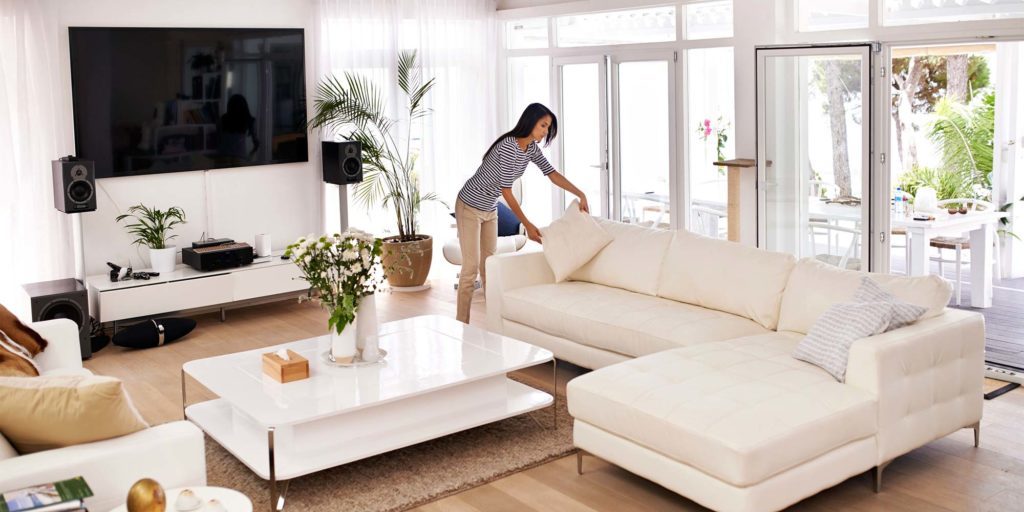
Do you really need to stage your house?
We often hear our #clients ask this exact question. Should I bother #staging my house? Will staging get me more #money? Should I pay a staging company? Should I rent furniture and accessories?
All with the same underlying question; is staging really worth it?
What do you get by staging your home for sale?
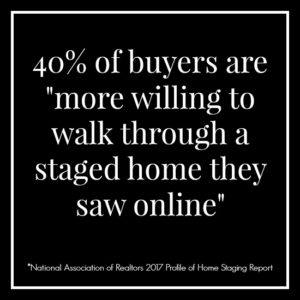
Buyers have reported that an overwhelming 77% of them felt that staging helped them to imagine the property they were viewing as a future home, according to the National Association of Realtors (NAR – in the United States) “2017 Profile of Home Staging.” That is exactly what good staging does. It’s a form of #advertising (or merchandising) of your home that draws on some of the fundamentals of interior design. The object of staging is to flatter the property but not be too obvious about it, like being dressed without drawing particular attention to what you’re wearing.
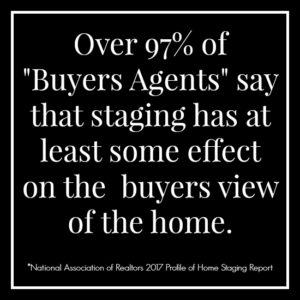
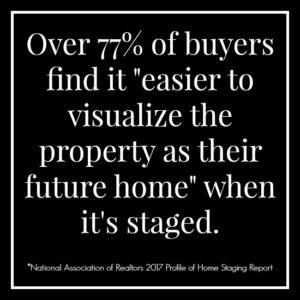
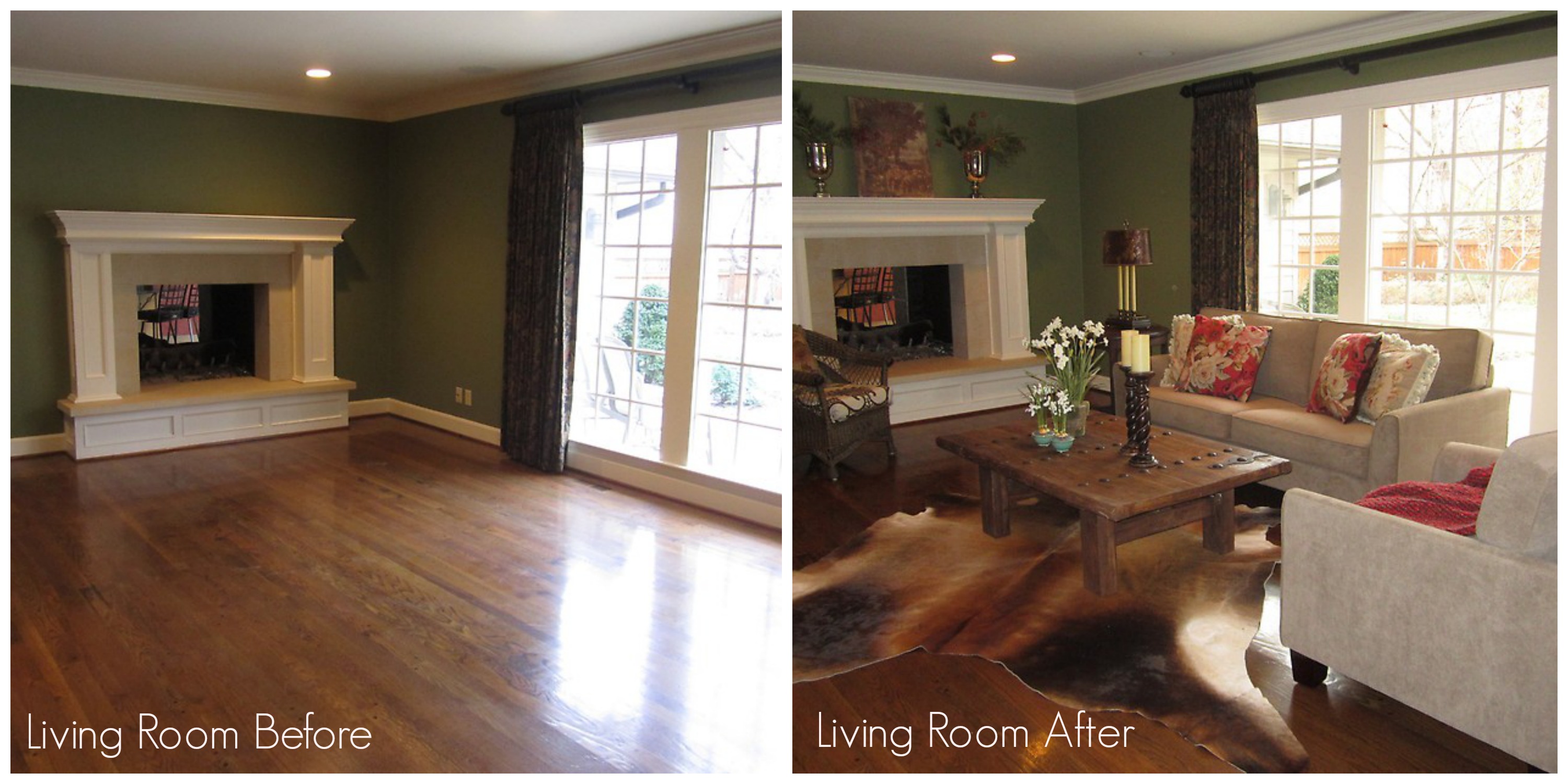
Good staging lets the buyers imagine themselves in the home; shows off its good features and hides its flaws; turns weird spaces into usable spaces; creates a mood; and makes the home look significantly better in photos.
The crux of it is that you have to get Buyers through the door and photos (on #MLS) are the major driver of this. The better your house looks in photos, the more Buyers you are likely to get to your listing.
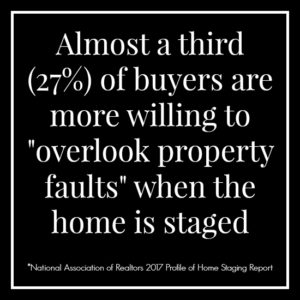
Will it get you a bigger sale?
There are many factors associated with how much your property will ultimately sell for. The question of whether staging will net you more money is one of the easy answers in life – yes it will.
According to NAR’s findings, 37 percent of sellers’ agents surveyed said staging raises the value of the property by 1 to 5 percent. But nearly a quarter of these same realtors (22 percent) put the gain somewhere in the 6-10 percent range. And 12 percent said the dollar value of a staged home jumps from 11 to 20 percent. Whatever the increase, though, just 4 percent of the respondents believe staging has no impact whatsoever on the home’s ultimate #selling price.
Lastly, a cost that most sellers don’t account for is the cost associated with not selling, this is not about time value of money, this is much more basic – it’s carrying cost. If you have a mortgage that runs $2,500/month and your other bills are costing $750/month, you are looking at “making” $3,250 for every month that you can sell your property earlier. In #Toronto‘s #market, 95 percent of staged houses sell in 8 days or less (on average), compared to 42 days for non-staged properties.
How much does it typically cost?
Now that we’ve level-set on how much it might net you back, we can figure out if it’s actually worth doing. The average staging professional says that you should spend somewhere in the 1-2% of your home’s value on staging. In Toronto that means that if you’ve got an average $875,000 home, you should be looking at somewhere in the $8,000-$10,000 range.
What will that get you?
This is not a paltry budget for a Toronto home seller. As such, you should probably look to involve a professional for a consultation (at the very least) and possibly to do the work for you.

A staging consultation takes place at the home to be staged. Using a set of industry guidelines, the home stager will evaluate your property inside and out. Then they’ll develop a list of recommendations designed to show your home in the best light. Consultations can take anywhere from one to three hours. At this point, you can either decide to tackle the recommendations on your own or hire the company to implement some or all the improvements for you.
Whether you decide to tackle it yourself, here are some guidelines for vacant and lived in homes.
What to do with a principal (or lived in) home
If you haven’t already painted in preparation, do so, and choose light, neutral colors that will be easy to paint over if necessary. This single step (which can be quite costly and eat up half of your staging budget) will make the house feel fresh, clean and neutral (get rid of your red accent walls, only YOU like them). Remove blinds and heavy curtains and consider investing in sheers and other lightweight window treatments, or leave windows uncovered if doing so won’t compromise privacy.
Next, you’ll want to clean and de-clutter your home. Make sure to focus on getting rid of bold accent furniture, art and rugs you may own (just like the accent walls, you may be the only person who appreciates them). You will also want to move your furniture off the walls to give the home a more airy feel, and invite the Buyers to believe that there is nothing to hide.

Many homes have underutilized areas like stair nooks, junk rooms, and basements. Consider staging these to add value; since you’re not using them anyway, it won’t be an inconvenience to keep them looking dressed up, and by occupying them, you’ll reduce the chance that they attract clutter. Add an armchair, a table, and a soft lamp to make a reading corner, or a yoga mat and some pillows to create an instant yoga studio. These little spots in your home can become hidden gems to buyers, rather than awkward spaces.
Finally, for #showings, open the windows at least ten minutes a day for ventilation to keep the house smelling fresh, and make sure to keep fresh vases of flowers around along with living plants, because they can make your house much more inviting. If you have animals, clean up after them regularly (i.e. vacuum daily) or just put your pets at a friends or in boarding (many people have allergies and fears of pets).
What to do with a vacant (or empty) house
Staging is even more important when you are selling a vacant property. Even if the home is clean and sports a great layout, most buyers have difficulty imagining how their furniture will fit into an empty space. Empty homes also lack the emotional appeal needed to make buyers fall in love with your house and put in an offer.
Rent Furniture From a Local Company
For sellers on a budget, renting furniture is more viable than buying for your vacant home. You won’t have to waste your time visiting furniture stores looking for the right furniture. Renting updates your home instantly and helps you to save money. It is also ideal for smaller homes which don’t need a lot of furniture.
On average, buyers take 3 to 6 minutes to view a house. Rental furnishings can make those few minutes count.
Most furniture rental companies deliver to homes making your job easier. Another advantage of renting furniture is you don’t have to worry about extra storage after selling your home.
If you can’t rent furniture (or buy new pieces), be very nice to your friends and family and ask to borrow some of their pieces. Many people have unused furniture in their basements, garages, or storage units. If you find some pieces you can use in your vacant home, you’ll save a considerable amount of money and use it on other crucial expenses.
You can also borrow home accessories to stage your empty home during showings. Borrowing furniture is the most inexpensive way of getting furnishings for your home. Also, consider visiting garage sales and consignment shops that have quality second-hand furniture options.
Our opinion
When our clients are selling their home, we use facts to help them navigate the choices. As a rule of thumb, homes that are properly staged will net a seller an average of 2.5% more for their home (that’s basically the entirety of the commission you may want to pay when selling through our system). Further, the home sells five (5) times faster (on average) when staged, which means less carrying cost for you.
It really does seem like a no brainer, stage your home.
We leave you now with some very ugly homes we found while researching this post.